A solid mma gear guide does more than list products — it maps out an entire system. Mixed martial arts pulls from striking, wrestling, jiu-jitsu, and Muay Thai, which means your equipment list is longer and more specialized than almost any other combat sport. Get it wrong and you waste money on the wrong training tools or, worse, walk into sparring under-protected. Get it right and every training session builds toward a complete fighter.
Disclosure: As an Amazon Associate, AskMeBoxing earns from qualifying purchases. This helps us keep publishing free gear guides at no extra cost to you.
What This Guide Covers
– Striking gear: gloves, hand wraps, shin guards, headgear
– Grappling gear: rash guards, shorts, spats, compression
– Mandatory protection: mouthguard, cup, ear guards
– Bag work equipment: heavy bags, grappling dummies
– Strength and conditioning tools: resistance bands, medicine balls, agility ladders
– Training vs. competition gear differences
– Budget tiers: beginner ($200–$350), intermediate ($500–$800), advanced ($1,000+)
– Brand comparison: Hayabusa vs. Venum vs. RDX vs. Fairtex
1. MMA Gloves: Training vs. Competition
MMA gloves are the piece of equipment most beginners get wrong first. There are two distinct categories — training gloves and competition gloves — and they are not interchangeable. Buying competition-spec gloves for your first sparring sessions is one of the most common and costly mistakes new fighters make, so understanding the difference before you spend a dollar saves both money and injury risk.
Training gloves are designed for sparring and bag work. They typically weigh between 7 oz and 16 oz depending on use case. An MMA-specific sparring glove in the 7 oz range provides more palm padding than a pure competition glove while still allowing for grappling transitions. Most fighters use 7 oz open-finger MMA gloves for technical sparring and 16 oz boxing gloves for heavy sparring rounds to protect both themselves and their training partners.
Competition gloves are the slim 4 oz open-finger design regulated by organizations like the UFC, Bellator, and regional promotions. These are not appropriate for training — the minimal padding at 4 oz puts partners at significant risk. If you are preparing for an amateur fight, you will need to purchase or borrow competition gloves separately from your regular training kit, and only use them for shadow or pad work in fight week, not for partner rounds.
MMA gloves vs. boxing gloves is a question that comes up often in gym discussions. Boxing gloves offer superior knuckle and wrist protection for heavy bag sessions, which is why many MMA fighters keep a pair in their bag alongside their MMA training gloves. For MMA-specific sparring work, our best MMA gloves for beginners breaks down the top entry-level options by fit, padding density, and grappling flexibility. If you also want a pair of boxing gloves for your heavy bag rounds, our best boxing gloves for beginners covers models in the $30–$80 range that cross over well into an MMA training environment.
Key specs to look for in training MMA gloves
– Open palm design with enough grappling flexibility to shoot and clinch
– Wrist wrap closure (Velcro or hybrid strap) with at least 3 inches of wrist support
– Layered foam construction — avoid single-foam cheap models that compress and harden quickly
– D3O or multi-density padding in the knuckle zone for sparring safety
2. Hand Wraps and Wrist Protection
Hand wraps are non-negotiable, whether you train striking-heavy or spend most sessions on the mat. They stabilize the small bones in the hand, support the wrist under load, and extend the life of your gloves by absorbing sweat across training sessions.
Traditional cotton stretch wraps (around 180 inches) are the standard for a reason: they conform to the shape of your hand as you wrap, creating a custom fit that inner gloves cannot replicate. A quality pair costs around $8–$15 on Amazon and should be washed after every session to prevent bacterial buildup inside your gloves. Inner gloves — a padded slip-on alternative available for around $15–$25 — work for quick technique sessions but do not replace wraps for heavy bag rounds or sparring. Learning to wrap correctly is a fundamental skill that takes about ten minutes to develop and protects you for years.
“Fighters get injured in training more often than in competition. Most hand injuries are preventable with proper wrapping and gloves that fit correctly.” — A consistent finding across sports medicine literature on combat sport injuries.
For both the Mexican wrap method and the traditional straight-wrap technique, the mechanics are identical whether you are training boxing or MMA. The goal is the same: lock the knuckles in alignment, support the thumb, and create a brace across the wrist joint so that impact force distributes across the entire hand rather than concentrating on vulnerable joints.
3. Striking Protection: Headgear, Shin Guards, and Mouthguard
Headgear
MMA headgear is different from boxing headgear in one key way — cheek protection. Pure boxing headgear often covers the cheekbones; MMA headgear typically uses an open-face or smaller cheek guard design to accommodate clinch work and grappling transitions without the headgear rotating and blocking vision during ground engagement. Look for a model that does not significantly obstruct peripheral vision, as head movement is a core defensive skill you need to practice under realistic conditions.
Entry-level options land around $40–$70. Mid-range models from Fairtex, RDX, or Hayabusa run $80–$150. The most important fit consideration is that the headgear stays positioned during grappling scrambles — a model that rotates freely when grabbed is worse than no headgear because it blocks your vision at the moment you need it most. Strap-back models with a rear lace closure tend to stay put better than pure Velcro closures in heavy clinch work.
Shin Guards
Shin guards sit in an interesting middle position in MMA training. They are optional for fighters who emphasize grappling but mandatory for anyone drilling kicks or doing kickboxing-style rounds. If your gym runs Muay Thai-format sparring rounds alongside MMA work — which most serious MMA gyms do — you need a proper pair. Our review of the best Muay Thai shin guards applies directly to MMA cross-training use and covers the top slip-on and strap-on options in the $30–$90 range.
The choice is between slip-on (sock-style) and strap-on (velcro) shin guards. Slip-ons transition faster during training, which matters for mixed rounds where you move from striking to wrestling and back. Strap-on models offer a more secure fit and better overall coverage of the lower leg. For fighters who do a lot of Muay Thai sparring alongside their MMA work, the strap-on format is generally worth the slightly slower transitions for the added protection it provides.
Mouthguard
A mouthguard is mandatory for sparring in any combat sport. At minimum, use a boil-and-bite model (around $10–$20 on Amazon) for your first months of training. As your training frequency increases, invest in a custom-fitted model from a dental lab or a premium retail option like SISU Aero or Shock Doctor Gel Max in the $25–$50 range. A quality mouthguard protects teeth, reduces concussion risk by absorbing jaw impact forces, and lets you breathe more naturally through rounds than a bulky cheap model allows.
Protection You Cannot Skip
– Cup/groin protector: mandatory for any live drilling or sparring, not optional
– Mouthguard: required before any contact round, including light technical rounds
– Ear guards (wrestling-heavy training): prevents cauliflower ear from repeated mat friction
– Hand wraps: under every pair of gloves, every session
Skipping any of these is a false economy. One training injury costs far more — in time, money, and recovery — than the gear itself ever would.
4. Groin Protection: Cups and Compression Supporters
The groin cup is mandatory and specific to the MMA context in ways that general athletic protection is not. Standard athletic cups designed for baseball or soccer are built for static or low-dynamic movement. MMA requires a cup that handles the full dynamics of grappling — hip escapes, guard passes, takedown defense, turtle position, and ground-and-pound. A poorly fitted cup shifts during movement and creates gaps in coverage at exactly the moments when protection matters most.
Look for a cup design that uses a compression short or integrated supporter to hold the shell firmly through a full range of motion. Hybrid designs that embed the cup into a compression short — rather than a traditional jockstrap — are worth the additional $10–$20 premium over separate setups because the compression material keeps the shell in position through rolling, shooting, and scrambles. Quality options available on Amazon run from $20 for basic models to $60 for integrated compression designs from brands like Venum or RDX. Our dedicated review of the best cup protectors for MMA covers the formats that hold up in live grappling rounds and identifies which designs shift the least during high-movement drills.
5. Grappling Apparel: Rash Guards, Shorts, and Spats
MMA training apparel requires more thought than most sports because you are working across two distinct environments — standing striking and ground grappling — often within the same round. Gear that works well for boxing sparring can restrict movement on the mat, and gi-specific grappling apparel creates problems in striking rounds. The solution is apparel built specifically for mixed training.
Rash Guards
A rash guard is the base layer for grappling. It serves three functions simultaneously: reducing mat friction that causes skin abrasions, minimizing the risk of skin-to-skin contact and the bacterial or fungal infections that come with it, and providing compression support for muscles during extended rolling sessions. Long-sleeve rash guards are preferred for beginners because of the full skin coverage they provide. Short-sleeve options are common in hot gym environments where temperature regulation matters more than complete arm coverage.
Material matters here more than brand. Look for polyester-spandex blends (typically 85/15 or 88/12) that maintain compression without losing stretch after repeated washing. Sublimation printing holds color and detail significantly better than screen printing over the lifecycle of the garment. Budget $25–$60 for quality options from brands like Hayabusa, Venum, or Sanabul. The $25 Sanabul rash guards on Amazon perform considerably better than their price suggests for entry-level training volume.
MMA Shorts
MMA shorts need to accommodate both the wide hip engagement of grappling and the full leg extension of kicks. Standard board shorts from surf or swim brands restrict hip mobility for triangle setups and high kicks. Training-specific MMA shorts solve this through structural details that matter more than brand name. Look for:
– Split lateral seams or stretch panels at the inner thigh for full hip mobility
– Velcro and drawstring waist combination (prevents shorts being grabbed or stripped during scrambles)
– Length at or just above the knee (longer shorts catch on ankles during guard work and bottom position transitions)
Price range for quality training MMA shorts runs $30–$80. Brands like Venum, RDX, and Hayabusa all offer solid options at different price points. The mid-range Venum Bangkok Spirit or Undisputed shorts at around $45–$55 offer good stretch-panel design for the price.
Spats (Compression Tights)
Spats — compression tights worn under shorts — are increasingly standard in MMA gyms. They provide the same rash-prevention benefit as a rash guard but for the lower body, which is particularly important for guard work, leg locks, and any drilling that involves high skin-to-mat contact. Many fighters pair spats with MMA shorts for a cleaner grappling experience than shorts alone provide, especially during no-gi jiu-jitsu rounds within an MMA training session. Most MMA gym environments require shorts worn over the top of spats rather than spats alone.
6. Ear Guards for Wrestling-Heavy Training
Cauliflower ear is an occupational reality in grappling-heavy MMA training. Repeated friction and impact to the outer ear causes the cartilage to swell, blood pools between the cartilage and skin, and without proper treatment the ear permanently hardens into the deformed shape that signals years of mat time. Prevention is far simpler than treatment. Wrestling ear guards in the early training years, before the ears have been repeatedly traumatized, eliminate the accumulation of micro-damage that leads to permanent deformity.
Wrestling ear guards — different from boxing headgear — are minimal head coverage pieces with reinforced cups that sit directly over the ears. They strap under the chin and are designed not to impede vision or head movement during grappling. If your training schedule is grappling-heavy, wearing ear guards for the first 6–12 months of consistent training is significantly easier than managing hematomas or undergoing surgical drainage procedures later. Budget $15–$40 on Amazon for functional options from brands like Cliff Keen or Asics. The Cliff Keen E58 at around $30 is the standard recommendation across wrestling and grappling communities.
7. Bag Work Equipment
Heavy Bags
Heavy bag work is the highest-volume striking training tool in any serious MMA program. For home training, a 70–100 lb hanging bag is the standard recommendation. Lighter bags swing excessively under powerful strikes and do not provide the resistance needed for power development. Heavier bags in the 100–150 lb range are more appropriate for advanced strikers looking to develop force absorption response, though they require stronger ceiling mounts.
Freestanding bags are a practical alternative for training spaces where ceiling installation is not feasible. They trade some stability for convenience — the base fills with water or sand — and the top-heavy design means they move more freely than hanging bags under leg kick combinations. For MMA training specifically, a full-body freestanding bag that extends to leg height is more useful than a short torso-only model. Centurion or BOB XL models on Amazon in the $200–$350 range offer the body proportions useful for MMA-specific striking patterns.
Grappling Dummies
A grappling dummy extends your solo training beyond striking into the ground game. Use it for takedown practice, submission entries, ground-and-pound positioning, and drilling guard passes without a partner — all at any hour without scheduling. Our review of the best grappling dummies breaks down the formats worth investing in at each price point, from entry-level cylindrical torso models at around $60 on Amazon to full-body articulated versions in the $200–$400 range.
The full-body options are significantly more useful for MMA-specific drilling. A torso dummy allows ground-and-pound practice but cannot be used for arm bar setup drilling, rear naked choke entries, triangle positioning from the back, or guillotine entries from the front headlock — all fundamental MMA grappling sequences. If you are going to invest in a grappling dummy, the full-body articulated format at $200–$300 returns far more training utility than a torso-only model at half the price.
Bag Work Rotation for MMA Training
– Heavy bag: power development and long combination work (3–4 sessions/week)
– Speed bag: hand-eye coordination and shoulder endurance ($30–$80, ceiling-mounted)
– Double-end bag: accuracy, timing, and head movement ($25–$60, floor-and-ceiling anchor)
– Grappling dummy: solo drilling when training partners are unavailable
Rotating between bag types trains different physical attributes. Heavy bag work alone builds power but neglects the accuracy and timing that make that power land in live rounds.
8. Strength and Conditioning Tools
Resistance Bands
Resistance bands are the highest value-per-dollar training tool in MMA when used correctly. They train explosive hip extension, rotational power for strikes, shoulder stability under load, and pulling strength patterns — all of which transfer directly to both striking power and grappling control. A complete set of looped resistance bands covering light to heavy resistance runs $20–$50 on Amazon and takes up almost no storage space, making them practical for home training setups of any size.
Medicine Balls
Rotational medicine ball work develops the trunk power that generates striking force from the ground up rather than from the arm alone. Slam drills, rotational wall throws, and partner-pass sequences all build the rapid force-transfer capability that separates fighters who generate real power from fighters who simply move fast. A 10–15 lb medicine ball for slam work and a 6–10 lb slam ball for rotational throws covers most MMA conditioning needs. Combined cost on Amazon runs $40–$120 depending on quality and whether you buy a set or individual balls. Look for a slam ball design with minimal bounce for floor work rather than a rubber medicine ball that rebounds unpredictably in a small training space.
Agility Ladders
Footwork is systematically underrated in MMA training because the ground game draws so much coaching attention, but poor footwork at range creates predictable angles and easy single-leg takedown setups for opponents who time your movement. An agility ladder at $15–$30 on Amazon trains lateral quickness, coordinated foot patterns, and the rhythmic footwork timing that makes a striker harder to read at range. The flat vinyl design folds down for storage and lays flat on any floor surface, making it practical for garage or basement home training.
Jump Rope
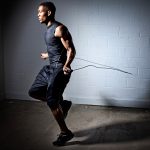
Jump rope is one of the oldest conditioning tools in combat sports for a reason that goes beyond tradition — it simultaneously develops cardiovascular endurance, foot rhythm, and hand-eye coordination in a single low-equipment drill. A basic speed rope works well for most fighters at around $10–$20 on Amazon. Weighted ropes and cable speed ropes offer progression for experienced jumpers targeting shoulder endurance alongside the cardio component. Budget $10–$40 total depending on whether you want a basic model or a weighted option.
9. Training vs. Competition Gear: Key Differences
| Gear Item | Training Version | Competition Version | Why Different |
|---|---|---|---|
| MMA Gloves | 7 oz open-finger | 4 oz open-finger | Training needs more padding for partner safety |
| Headgear | Full sparring helmet | None (most MMA rules) | Competition is sanctioned; training protects long-term brain health |
| Shin Guards | Padded strap-on or slip-on | None | Competition accepts kick impact; training minimizes cumulative injury |
| Cup | Full MMA compression cup | Required (same standard) | Mandatory in both environments; same protection level |
| Mouthguard | Boil-and-bite or retail custom | Dental custom recommended | Competition impacts are harder; dental custom fits better under real pressure |
| Rash Guard | Long or short sleeve | Short sleeve or none | Competition rules vary by promotion; training defaults to more coverage |
| Ear Guards | Wrestling-style cups | None | Long-term cartilage protection; not worn in bouts |
10. Brand Comparison: Hayabusa vs. Venum vs. RDX vs. Fairtex
Hayabusa (Japanese-founded, Canadian-based) builds some of the most technically refined MMA gloves available at any price. Their T3 and Ikusa lines use Vylar engineered leather and a dual-X wrist closure system that provides stability that single-strap designs cannot match. Price point is premium — expect $120–$180 for their MMA training gloves. Durability is exceptional across extended training use; the layered foam construction maintains its shape significantly longer than budget alternatives that compress and harden within a year.
Venum is the official UFC gear partner and carries strong brand recognition as a result. Their Challenger and Elite series offer solid value at $50–$100. Build quality is good for the price point, though the construction refinement does not quite match Hayabusa’s more expensive models. Venum’s MMA shorts and rash guards compete well against more expensive options — the apparel line is arguably stronger than the gloves at equivalent price points.
RDX offers the best value-to-quality ratio for budget-conscious beginners entering the sport. Their MMA gloves, shin guards, and complete bag sets in the $30–$70 range on Amazon are significantly better than what generic unbranded alternatives offer for similar prices. Materials are not as refined as Hayabusa’s premium lines, but for a first year of training before you know whether MMA will become a long-term commitment, RDX gear holds up reliably through the volume needed to make that determination.
Fairtex is a Thai brand with decades of Muay Thai equipment manufacturing behind their MMA expansion. Their MMA gloves and shin guards benefit from refinement developed for professional Muay Thai competitors, which translates well for MMA fighters who train heavy striking alongside their grappling work. Price range is $60–$140 for gloves. The Fairtex FGV15 MMA training gloves at around $85 are a frequent recommendation for fighters who want Thai construction quality at a price point below Hayabusa.
11. Budget Tiers: Building Your MMA Kit
Beginner Kit ($200–$350)
The beginner priority is clear: cover the mandatory protection items first, then add the training tools, and defer premium brand upgrades until consistent training habits are established over at least three months.
– MMA training gloves (7 oz): $35–$60 (RDX, Venum Challenger)
– Boxing gloves for bag work (12–16 oz): $30–$60
– Hand wraps (2 pairs): $15–$25
– Mouthguard (boil-and-bite): $15–$25
– Cup/groin protector: $20–$35
– Rash guard (long sleeve): $25–$40
– MMA shorts: $30–$50
– Basic shin guards: $30–$50
Total: approximately $200–$345. This covers every training session safely without premium brand pricing, and the quality level from brands like RDX and Venum Challenger is sufficient to determine whether you want to invest further.
Intermediate Kit ($500–$800)
At this stage you are training consistently at 3–5 days per week, sparring regularly, and your entry-level gear is showing real wear. Upgrade the contact points first — gloves and headgear take the most abuse and degrade fastest under sparring frequency.
– Hayabusa or Fairtex MMA training gloves: $90–$150
– Quality boxing gloves for heavy bag and sparring (14–16 oz): $70–$120
– MMA sparring headgear with cheek coverage: $80–$130
– Custom mouthguard (retail custom or dental): $50–$80
– Spats (2 pairs for rotation): $50–$80
– Grappling dummy (entry-level full body): $120–$200
– Heavy bag for home training (70–100 lb): $80–$150
This kit supports serious training at intermediate level with the option to add home bag sessions outside of gym hours.
Advanced Kit ($1,000+)
Advanced fighters and competition-prep athletes allocate gear budget based on identified training gaps. Common additions at this level include: a full strength and conditioning tool set (resistance bands, medicine ball, agility ladder, jump rope at $100–$200 combined), a premium articulated full-body grappling dummy at $250–$400, a second pair of competition-grade 4 oz gloves for fight-week preparation at $60–$100, recovery tools including foam rollers and compression gear at $100–$200, and multiple sets of training apparel to support daily training without laundry delays.
12. Putting It All Together: Training Smart
The complete mma gear guide above covers every training category, budget tier, and gear type you will encounter across a serious MMA program — from your first sparring session to fight-week preparation. Start with the mandatory protection layer: mouthguard, groin cup, hand wraps, and training gloves. Add the striking and grappling apparel layer next. Then build out the conditioning tools and home training equipment as training frequency increases and your investment in the sport becomes clearer.
For parallel reading on the pure striking side of your MMA training, our ultimate boxing gear guide mirrors this structure for the boxing discipline and covers headgear, bag work equipment, and glove selection in greater striking-specific depth. No single purchase makes you a better fighter — the kit is the structure that makes consistent, safe training possible over the long term. Consistent training, not premium gear, is what builds a complete mixed martial artist.
—
Câu hỏi thường gặp
1. What is the difference between 4 oz and 7 oz MMA gloves?
4 oz gloves are competition-spec with minimal padding — used in sanctioned fights only. 7 oz gloves are the standard training weight, providing enough padding for safe sparring while still allowing grappling transitions. Never use 4 oz gloves for partner training; the reduced padding puts your training partners at real injury risk.
2. Do I need both MMA gloves and boxing gloves?
Yes, for most MMA training programs. MMA training gloves (7 oz) are used for MMA-specific sparring and technique drilling. Boxing gloves (14–16 oz) are recommended for heavy bag sessions and hard sparring rounds where the extra knuckle and wrist protection matters over extended rounds. The two serve different purposes and most serious MMA fighters keep both in their kit bag.
3. What is the minimum protective gear required before a first sparring session?
At minimum: mouthguard, groin cup, MMA training gloves, and hand wraps. If striking rounds are included in the session, headgear and shin guards should also be in place before any contact begins. Do not skip protection to start sparring sooner — recovery time from a preventable training injury costs far more training sessions than taking an extra week to acquire the proper gear.
Written by the AskMeBoxing Team