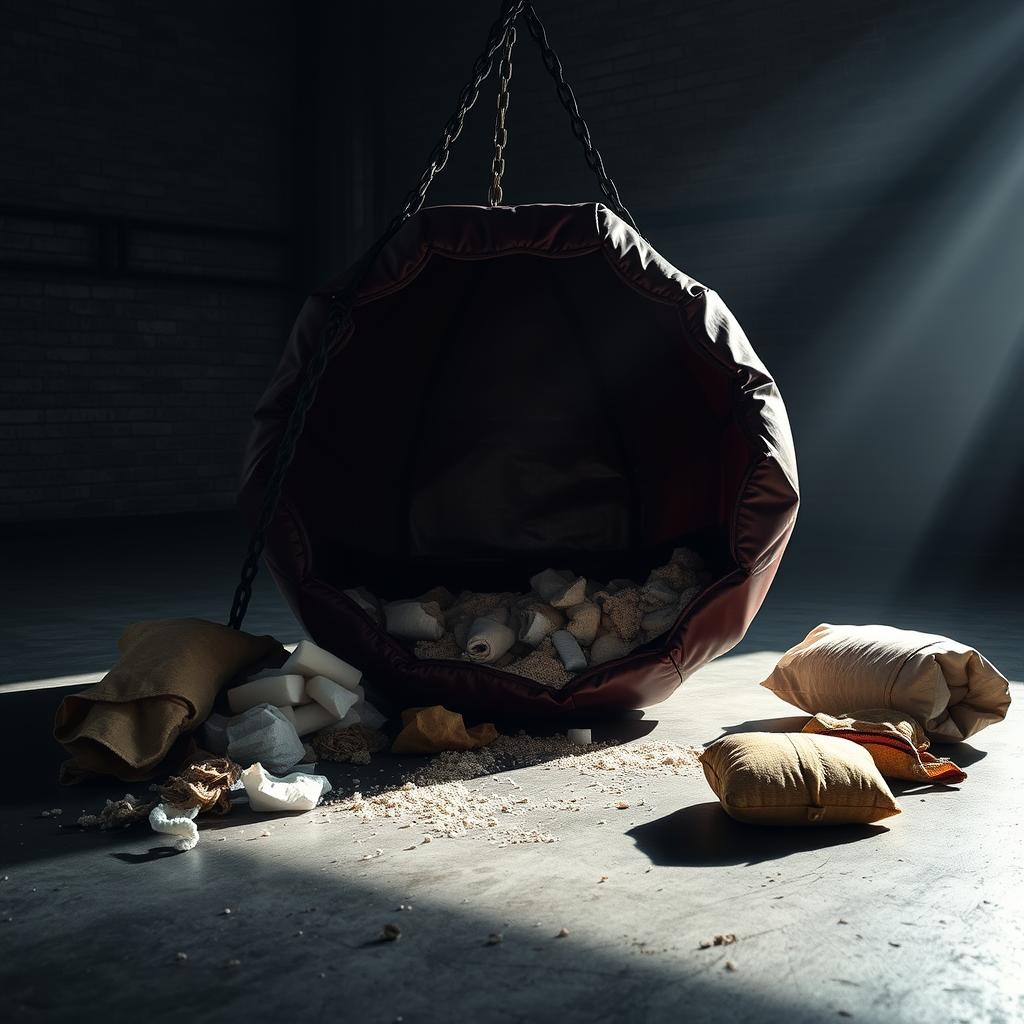
Most heavy bags ship unfilled for a reason — freight costs would be brutal, and honestly, filling it yourself gives you control over the weight, density, and feel that a factory-stuffed bag never will. I have filled and re-stuffed more bags than I can count over 15 years of coaching, and I can tell you the difference between a properly filled bag and a sloppy one is the difference between a productive training session and a trip to the hand surgeon. This guide walks you through exactly how to fill a heavy bag so it feels right, lasts long, and protects your hands from day one.
– Your heavy bag should weigh roughly half your body weight (a 180 lb person needs a 90 lb bag)
– Shredded fabric and old clothing are the safest and cheapest primary fill material
– Sand and sawdust add weight but must be sealed in bags and used as accent filler only
– Pack in 4–6 inch layers and compress each one with a broomstick before adding the next
– A bag liner prevents sand and dust from leaking through stitching
– The whole process takes 30–60 minutes and costs under $30 if you use household materials
1. Choosing Your Target Weight
Before you touch a single piece of fabric, you need to know how heavy your finished bag should be. This is not a guess — there is a simple formula that boxing gyms have used for decades.
Divide your body weight in half. That number is your baseline bag weight. A 160-pound fighter should aim for roughly 80 pounds. A 200-pound fighter needs closer to 100. If you are brand new to striking, drop 10 percent below that baseline. Your wrists, knuckles, and shoulders are not conditioned yet, and a bag that is too heavy will punish bad form faster than a good coach would. As you develop proper technique and hand strength over a few months, you can always open the bag and add more fill.
For households where multiple people will train on the same bag, split the difference between the heaviest and lightest user. A 70-to-80-pound bag works for the vast majority of home gym setups. If you are unsure what size shell to buy in the first place, our guide on what size punching bag do I need covers the length and diameter question in detail.
Rule of thumb from the gym: If the bag barely moves when you throw a hard cross, it is too heavy for you. If it swings wildly from a jab, it is too light. You want moderate swing — enough resistance to build power, enough movement to practice follow-up footwork.
2. Heavy Bag Fill Materials Compared
Not all fill materials are equal. Some are soft and forgiving, others are dense and punishing, and a few will ruin your bag if used incorrectly. Here is a breakdown of everything you can realistically stuff inside a heavy bag, along with cost, pros, and cons.
| Material | Weight per Cubic Foot | Feel on Impact | Cost | Best Use |
|---|---|---|---|---|
| Shredded Fabric / Old Clothes | 8–15 lbs | Soft to medium, forgiving | Free (household) or $10–$20 for textile scraps | Primary fill — 70–100% of bag volume |
| Sand (bagged) | 90–100 lbs | Very firm, dense | $4–$6 per 50 lb bag | Core weight only — 5–15% of volume, sealed in plastic bags |
| Sawdust | 10–15 lbs | Medium firm | Free–$10 (lumber yards) | Accent filler — mixed with fabric for added density |
| Foam Scraps / Packing Foam | 2–5 lbs | Soft, springy | Free (shipping boxes) or $15–$25 for a bag | Top and bottom padding layers, hand protection zones |
| Rubber Mulch | 25–35 lbs | Medium firm, consistent | $8–$12 per bag | Alternative to sand for even weight distribution |
| Rice / Grain | 40–50 lbs | Firm, compacts over time | $15–$25 per 25 lbs | Not recommended — attracts pests, absorbs moisture |
The clear winner for most people filling a heavy bag at home is shredded fabric as the primary material with small sealed bags of sand placed in the center for added weight. This combination gives you a bag that feels like a commercial gym bag without the $200+ price tag of a pre-filled option. If you want to skip the DIY process entirely, several brands sell unfilled heavy bag shells on Amazon — Outslayer and Title Boxing both make durable leather and vinyl shells that are built specifically for custom filling.
Why Pure Sand Is a Bad Idea
Filling your entire bag with loose sand will create a concrete block within two weeks. Sand migrates downward with every punch — the bottom third turns rock-hard, the top third goes soft, and you end up with a dangerous piece of equipment. Loose sand also leaks through stitching and zipper seams, coating your floor and getting into your eyes. If you want the weight of sand, always seal it inside zip-lock bags or contractor bags wrapped in duct tape, and surround those sand packets with fabric padding.
3. Tools and Supplies You Need
Gather everything before you start. You do not want to be halfway through the process, realize you need duct tape, and leave a half-packed bag slumping in your garage overnight.
Fill materials (choose your combination):
– Old t-shirts, towels, jeans, and bedsheets cut into 6–8 inch strips or squares
– 5–15 lbs of play sand or all-purpose sand in sealed bags (optional, for added weight)
– Foam scraps or packing peanuts for top and bottom cushion layers
Tools:
– A broomstick, wooden dowel, or baseball bat for compressing layers
– Duct tape for sealing sand bags
– A bathroom scale for weighing your progress
– Heavy-duty zip-lock bags or small contractor trash bags for sand packets
– A bag liner (a large garbage bag or purpose-made nylon liner that fits inside the shell)
Protective gear:
– Work gloves if handling rough fabric or sawdust
– A dust mask if using sawdust
A bathroom scale is the single most useful tool here — guessing weight leads to a bag that is either too light to train on or too heavy to hang safely. Having trouble deciding where to mount it afterward? Our guide on how to hang a heavy bag covers ceiling mounts, wall brackets, and stand options.
4. Step-by-Step Filling Process
This is where most people go wrong. They dump everything in, zip it up, and wonder why the bag feels lumpy and uneven after a week. The layering technique below is what separates a gym-quality fill from a garbage one.
Prepare the Shell
Unzip or unlace your bag shell and lay it flat on the ground with the opening facing up. If your bag has a D-ring or chain attachment at the top, that end stays at the top — do not flip it. Insert your bag liner now. A standard 30-gallon contractor trash bag works fine for most 70–100 lb bags. The liner keeps fine particles from working through the stitching, and it makes re-stuffing easier down the road because you can pull the whole liner out as one unit.
Build the Bottom Cushion Layer
Place a 2–3 inch layer of foam scraps at the very bottom of the bag. This creates a soft landing zone for the base, which takes the least impact during training but still needs to maintain its shape. Press the foam down firmly with your hands — no tool needed for this first layer.
Layer and Compress the Fill
This is the core of the process and where your patience pays off.
– Add 4–6 inches of shredded fabric strips on top of the foam base
– Use the broomstick to compress the fabric firmly, working from the center outward toward the edges
– Pay special attention to the sides of the bag — this is where air pockets and soft spots form
– After compressing, add a sand packet (if using) in the center of the bag, surrounded by a ring of fabric on all sides
– Add another 4–6 inch fabric layer and compress again
– Repeat this pattern until the bag is filled to about 6 inches from the top
Every layer should feel firm when you press down on it with your palm. If your hand sinks in more than half an inch, compress more. A loose fill will settle within a few sessions and leave you with a top-heavy mess.
Never place sand packets near the outer wall of the bag. If a sand bag sits directly behind the striking surface, you are essentially punching a bag of sand with a thin layer of vinyl or leather between you and the grit. This is how hand and wrist injuries happen. Sand packets belong in the dead center of the bag, wrapped in at least 3–4 inches of fabric on every side. Also — if you use any organic material like sawdust, make sure it is completely dry before sealing it in the bag. Moisture trapped inside leads to mold, mildew, and a smell that will make your entire garage unusable.
Fill the Top and Close
Add a final 2–3 inch foam layer at the top, compress everything one more time, and close the bag liner by twisting and folding the excess material. Zip, lace, or buckle the bag shell closed. Pick the bag up by its mounting hardware and give it a few solid shakes. Listen for shifting — if you hear sand moving freely or feel lopsided weight, open it back up and adjust.
Weigh the Finished Bag
Step on your bathroom scale holding the bag, then subtract your body weight. If the bag is within 5 pounds of your target weight, you are good. If it is too light, add more fabric or an extra sand packet. If it is too heavy, remove a sand packet — fabric alone rarely makes a bag too heavy for its intended user.
5. Common Mistakes and How to Fix Them
I have seen every filling mistake in the book, both in my own gym and in bags that students bring in asking me to fix. Here are the ones that come up over and over.
Hard Spots
Hard spots happen when sand settles to one area or when fabric clumps together instead of spreading evenly. The fix is to lay the bag on its side and knead the affected area with your hands, breaking up clumps and redistributing fill. If the hard spot is caused by a sand packet that shifted, you need to open the bag and reposition it.
Uneven Weight Distribution
If the bag swings in a lopsided circle instead of a clean back-and-forth arc, the fill is heavier on one side. Open the bag and redistribute. This is more common in cylindrical bags than in teardrop or angle bags because the wider diameter leaves more room for fill to shift laterally.
Settling After First Few Sessions
Every newly filled bag settles. After your first 3–5 sessions, the top will feel softer than the bottom. This is normal. Open the bag, add 2–3 inches of shredded fabric on top, compress, and close. Most bags need one or two top-ups in the first month before the fill stabilizes.
Mark your calendar for a fill check 2 weeks after your first session and again at 6 weeks. After that, most well-packed bags only need a top-up once or twice a year. When you do a top-up, always add material from the top and compress downward — never try to inject fill from the bottom or sides. Keep a small bag of shredded fabric scraps set aside specifically for this purpose.
Smell and Moisture Problems
If you used damp fabric or unsealed sawdust, your bag will develop a musty smell within weeks. The only fix is to empty the bag completely, dry the shell in direct sunlight, replace all filling with dry material, and start over. Prevention is everything — make sure every piece of fabric is bone dry before it goes in, and never use sawdust stored outdoors or in a humid shed.
6. DIY Filling vs. Buying Pre-Filled: Cost Breakdown
Filling a heavy bag yourself is almost always cheaper than buying pre-filled, but savings depend on what materials you already have at home.
A quality unfilled shell from Outslayer or Title Boxing runs $60–$120 on Amazon depending on size and material. Fill it with old clothes and a $5 bag of play sand, and your total investment is under $70 for a bag that would cost $150–$250 pre-filled. Even buying textile scraps and foam keeps you under $100.
The tradeoff is time — 30 to 60 minutes your first time. If that sounds like a hassle, pre-filled bags from Ringside, Everlast, or Outslayer are solid options, but you lose the ability to customize weight and density. For a full comparison, check out heavy bag vs freestanding bag to see how hanging bags stack up against base-filled alternatives.
7. Maintenance After Filling
A properly filled heavy bag is not a set-it-and-forget-it piece of equipment. Fabric compresses over time, sand packets shift with repeated impacts, and the shell takes a beating from sweat and friction. Here is what to do on a regular schedule.
– Wipe down the shell with a damp cloth and mild soap every few sessions to prevent cracking
– Check fill density monthly by squeezing the top, middle, and bottom — all three should feel roughly equal
– Top up the fill every 6–12 months or whenever the top section feels noticeably softer
– Rotate the bag 90 degrees on its mount monthly so the same surface does not take all the abuse
– Inspect mounting hardware (chains, straps, swivel) for wear at the same time you check the fill
If you are setting up a new home gym and want to make sure your bag fits into a broader training space, our guide on how to set up a punching bag at home covers placement, flooring, and clearance requirements.
Frequently Asked Questions
1. Can I fill a heavy bag with just sand?
No. Pure sand compacts into a rock-hard mass at the bottom of the bag within days. It also leaks through stitching and zippers, creating a mess and reducing bag weight over time. Sand should only be used as a sealed accent filler — small bags of sand placed in the center of the bag and surrounded by several inches of fabric on all sides. This adds weight without creating dangerous hard spots on the striking surface.
2. How long does it take to fill a heavy bag?
Plan for 30 to 60 minutes your first time. The actual filling goes quickly, but compressing each layer properly is what takes the most time. Rushing this step is the single biggest cause of uneven bags. Once you have done it once, re-stuffing or topping up an existing bag takes about 15 minutes.
3. How often do I need to re-stuff my heavy bag?
Most bags need a small top-up of fabric within the first month as the initial fill settles and compresses. After that, check the fill every 6 months and add material if the top third of the bag feels noticeably softer. A full re-stuff — emptying and refilling from scratch — is typically only needed every 2–3 years, or sooner if you train daily at high intensity.
8. Get Your Bag Filled and Start Training
Learning how to fill a heavy bag is one of those skills that sounds complicated until you actually do it. The whole process comes down to choosing the right mix of materials, packing them in tight layers, and checking your work after the first few sessions. A well-filled bag feels solid without being punishing, swings with a natural rhythm, and holds its shape for months between top-ups. Skip the shortcuts, take the extra ten minutes to compress each layer properly, and your hands, wrists, and training partners will thank you for it.
Written by the AskMeBoxing Team