

Hand speed separates fighters who land clean and fighters who get countered. Watch any footage of Roy Jones Jr. or Manny Pacquiao and you will notice their punches arrive before the opponent can react, not because they throw harder, but because they throw faster. The good news is that how to improve hand speed for boxing is largely a matter of targeted training, not genetics. Speed is a skill, and like any skill, it responds to deliberate, consistent practice with the right drills.
– Hand speed depends on neuromuscular efficiency, fast-twitch muscle fiber recruitment, and proper technique.
– Relaxation between punches matters as much as explosive contraction during punches.
– Training with light hand weights (1–3 lb) followed by unweighted reps builds measurable speed gains.
– The speed bag and double-end bag are two of the most effective tools for developing faster punches in boxing.
– Consistency beats intensity: 3 dedicated speed sessions per week produce better results than daily burnout training.
1. Why Hand Speed Matters More Than Raw Power
Related Reading
Most beginners fixate on punching hard. That instinct is understandable, but in a real boxing match, the punch that lands first usually wins the exchange. A fast jab disrupts an opponent’s rhythm, sets up power shots, and scores points that slow heavy hands never will. Sugar Ray Leonard built an entire Hall of Fame career around hand speed, beating bigger, stronger opponents because his combinations arrived in bunches before they could counter.
From a neuromuscular standpoint, hand speed is governed by your ability to recruit fast-twitch (Type II) muscle fibers in the shoulders, triceps, and forearms. These fibers contract rapidly and produce short bursts of explosive force, exactly what a fast punch requires. The catch is that fast-twitch fibers fatigue quickly, which is why speed training focuses on short, explosive sets rather than long grinding rounds. Over time, your nervous system learns to fire these motor units more efficiently, and punches that once felt sluggish start snapping off the shoulder with minimal effort.
“Speed kills. The fastest hands in boxing history — Leonard, Pacquiao, Roy Jones — all proved that landing first matters more than landing hardest.”
Speed also has a defensive benefit most people overlook. A faster punch means a faster retraction, which means your guard returns to its protective position sooner. If you want to sharpen the punch that benefits most from speed, start with our guide on how to throw a jab in boxing.
2. The Science Behind Faster Punches
Understanding the mechanics behind boxing hand speed drills helps you train smarter. Punching speed is not a single attribute. It is the combined result of several physical and neurological factors working together.
Muscle fiber composition plays a role, but it is not destiny. While genetics determine your baseline ratio of fast-twitch to slow-twitch fibers, research in sports science confirms that targeted explosive training can shift intermediate muscle fibers toward a faster-contracting profile. Plyometric exercises, ballistic movements at low loads, and high-velocity resistance training all contribute to this adaptation.
Relaxation is the hidden variable. Tense muscles are slow muscles. A fighter who stays rigid between punches wastes energy fighting against their own antagonist muscles. Watch Pacquiao throw a combination in slow motion and you will see his hands are loose and relaxed until the instant of contraction. This principle, sometimes called “differential relaxation,” is trainable. Shadowboxing with a conscious focus on staying loose between shots is one of the best ways to develop it.
Muscle memory and motor pattern efficiency reduce the neural processing time between deciding to throw and actually throwing. The more you practice a specific combination, the less conscious effort it requires, and the faster it fires. This is why drilling the same 3–4 punch combinations thousands of times is not boring repetition — it is programming your nervous system for speed.
Your punch speed exercises should also account for the kinetic chain. Speed starts from the feet, transfers through the hips, travels up the core, and exits through the shoulder and fist. A fast hand attached to a slow hip rotation is wasted potential. Our guide on boxing footwork drills for beginners covers the foundation that makes upper-body speed possible.
3. Essential Drills to Build Hand Speed
Every speed training boxing session should include at least two or three of the following drills. The key is variety — your nervous system adapts quickly to a single stimulus, so rotating drills keeps progress moving forward.
Shadowboxing for Speed
Shadowboxing is the most accessible and most underrated hand speed drill. Stand in front of a mirror, assume your stance, and throw 2–4 punch combinations at maximum speed for 15-second bursts, then rest for 15 seconds. The goal is pure velocity with correct form. Do not load up on power. Think “snapping” your punches out and back, keeping your shoulders relaxed between shots. Three rounds of this focused speed shadowboxing will prime your nervous system better than ten rounds of casual movement.
Speed Bag Rounds
The speed bag is purpose-built for hand speed development. It trains rhythm, timing, hand-eye coordination, and shoulder endurance all at once. Start with a basic front-circle rhythm using both hands, then progress to alternating single hits, double hits, and eventually combinations that mimic jab-cross patterns. Keep your hands up at chin level throughout — letting them drop defeats the purpose of the drill. Three to five 3-minute rounds with 30-second rests is a solid protocol.
Double-End Bag Work
The double-end bag bounces back unpredictably after every hit, forcing you to react quickly and throw fast, accurate follow-up punches. This drill builds reactive speed — the ability to fire a punch in response to a visual stimulus — which is arguably more important in sparring than raw hand speed alone. Focus on short, sharp punches rather than wide hooks. Two to three rounds builds excellent reflexes.
Weighted Shadowboxing
Hold light hand weights (1–3 lb) and throw fast combinations for 60-second intervals. Then immediately drop the weights and shadowbox the same combinations unweighted for another 60 seconds. The contrast effect makes your hands feel noticeably faster. Your nervous system recruits more motor units to overcome the resistance, and when the resistance disappears, those extra motor units keep firing. This is one of the most effective punch speed exercises you can do at home.
Never exceed 3 lb hand weights during shadowboxing drills. Heavier weights change your punching mechanics, put excessive stress on the wrist and elbow joints, and increase the risk of rotator cuff strain. If you feel any sharp pain in your wrists or shoulders, stop immediately and reduce the weight. Also, limit dedicated speed sessions to 3 per week — your fast-twitch fibers need 48 hours of recovery between intense sessions to adapt properly.
Resistance Band Punching
Anchor a resistance band behind you at shoulder height. Step forward into your stance so the band creates tension, then throw jabs, crosses, and hooks against the resistance. Perform 10–15 reps per punch at maximum speed, rest 30 seconds, and repeat for 3–4 sets. The band forces your muscles to generate more force through the entire range of motion, directly improving the acceleration phase of each punch. This builds explosive speed that transfers well to the cross — see our how to throw a cross in boxing guide for the technique foundation.
Clap Push-Ups
Plyometric push-ups train the fast-twitch fibers of the chest, shoulders, and triceps — all primary movers in a punch. Lower yourself at a controlled tempo, then explode upward hard enough to clap your hands before landing. Five sets of 5–8 reps with full recovery between sets is plenty. Quality matters far more than quantity here.
4. Structured Speed Training Plan
Knowing drills is one thing. Organizing them into a progressive plan is what produces real results. The table below outlines a practical weekly schedule that you can layer on top of your regular boxing training.
| Drill | Sets × Reps/Duration | Frequency | Rest Between Sets |
|---|---|---|---|
| Speed Shadowboxing | 3 × 15-sec bursts per round (3 rounds) | 3×/week | 15 sec between bursts, 60 sec between rounds |
| Speed Bag | 3–5 × 3-min rounds | 3×/week | 30 sec |
| Double-End Bag | 3 × 2-min rounds | 2×/week | 45 sec |
| Weighted Shadowboxing | 4 × 60 sec weighted + 60 sec unweighted | 2×/week | 30 sec between pairs |
| Resistance Band Punching | 4 × 10–15 reps per punch type | 2×/week | 30 sec |
| Clap Push-Ups | 5 × 5–8 reps | 2×/week | 60–90 sec |
| Jump Rope (speed intervals) | 3 × 30-sec sprint / 30-sec easy | 3×/week | Continuous |
Start with the lower end of the rep and set ranges during your first two weeks. Progress by adding one set per drill every two weeks, or by increasing the speed of execution rather than the volume. Speed training is about quality of contraction, not exhaustion.
5. Jump Rope: The Underrated Speed Builder
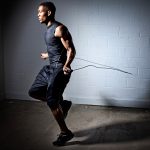
Boxers have jumped rope for over a century, and for good reason. Fast-paced skipping activates the calves, forearms, wrists, and shoulders in a coordinated, rhythmic pattern that translates directly to hand speed and overall coordination. When you sprint on the rope — alternating feet as fast as possible for 30-second intervals — you train the same neural pathways that fire during rapid-fire punch combinations.
The wrist rotation involved in turning the rope at high speed strengthens the same muscles that snap your fist forward and pull it back. Over weeks of consistent rope work, these muscles develop the endurance to maintain speed deep into later rounds. If you have ever wondered why boxers jump rope, hand speed development is one of the top reasons.
Try the “contrast method” with your jump rope: 30 seconds at absolute maximum speed, then 30 seconds at a relaxed pace. Repeat for 3 full rounds. This interval approach trains your fast-twitch fibers more effectively than steady-pace jumping and mirrors the burst-and-recover pattern of actual boxing rounds.
6. Technique Fixes That Instantly Increase Speed
Sometimes slow hands are not a conditioning problem — they are a technique problem. Fixing these common mechanical errors can produce noticeable speed gains within a single training session.
Keep your hands at your chin. Dropping your guard to waist level adds inches to the travel distance of every punch. Inches translate to fractions of a second, and fractions of a second are the difference between landing clean and getting countered. Roy Jones Jr. famously dropped his hands, but he had generational reflexes to compensate — most fighters do not.
Eliminate the wind-up. Pulling your hand back before punching is called “telegraphing,” and it does two things: it warns your opponent and it adds unnecessary distance to the punch path. A straight punch from the chin to the target is the shortest, fastest route. Practice throwing jabs and crosses from a static guard position without any pre-movement.
Exhale sharply on every punch. A short, sharp breath on each shot engages the core, stiffens the kinetic chain at the moment of impact, and keeps you from holding your breath, which creates tension. Tension kills speed. The classic “tsss” exhale you hear from experienced boxers exists for this exact reason.
Retract as fast as you extend. Most beginners focus only on throwing the punch forward. But the retraction — snapping the hand back to guard position — is equally important. It reloads you for the next shot and protects your chin. Drill this by throwing single shots in front of a mirror and paying attention to how quickly your fist returns.
7. Recovery and Nutrition for Speed Development
Speed training places unique demands on your neuromuscular system. Unlike hypertrophy work where muscle damage drives growth, speed work depends on nervous system freshness. Training fast while fatigued just teaches your body to move slowly under stress.
Sleep is non-negotiable. The nervous system consolidates motor patterns during deep sleep, so 7–9 hours per night directly supports the muscle memory gains you are building in training. Protein intake should stay at 0.7–1.0 grams per pound of bodyweight to support the fast-twitch fiber repair and growth that speed training demands. Creatine monohydrate (3–5 g daily) has strong research backing for improving explosive power output, and it is one of the few supplements with consistent evidence behind it.
Hydration affects nerve conduction velocity, so even mild dehydration can slow your reaction time and punch speed. Aim for at least half your bodyweight in ounces of water daily, more on heavy training days.
8. Frequently Asked Questions
1. How long does it take to see faster hand speed in boxing?
Most fighters notice measurable improvement within 4–6 weeks of consistent speed-focused training (3 sessions per week). The initial gains come from improved neuromuscular coordination and better relaxation between punches rather than structural muscle changes, which take longer. Recording yourself throwing combinations at week one and comparing to week six is the most objective way to track progress.
2. Should I use heavy weights to build faster punches?
No. Heavy resistance training builds strength and power, but it does not directly improve hand speed. For speed training boxing, stick to light loads (1–3 lb hand weights, light resistance bands) moved at maximum velocity. The goal is to train your nervous system to fire motor units rapidly, which requires moving fast, not moving heavy. Save the heavy lifting for your general strength sessions.
3. Can I train hand speed every day?
Training hand speed daily is counterproductive. Your fast-twitch muscle fibers and central nervous system need 48 hours to recover from high-intensity speed work. Three dedicated sessions per week, combined with your regular boxing training, is the proven approach. Overtraining leads to slower reaction times, sloppy form, and increased injury risk — the opposite of what you want.
—
Faster hands are built through focused, consistent training, not shortcuts. Commit to 3 speed sessions per week, rotate through the drills outlined above, fix any technique leaks in your mechanics, and give your body the recovery it needs. Within a few weeks, you will notice your boxing hand speed improving — combinations will feel sharper, your jab will arrive before opponents can react, and your confidence in exchanges will grow. Speed is a trainable skill, and every session you invest in it pays dividends in the ring.
Written by the AskMeBoxing Team




2 thoughts on “How to Improve Hand Speed for Boxing: Proven Drills, Tips & Training”
Comments are closed.