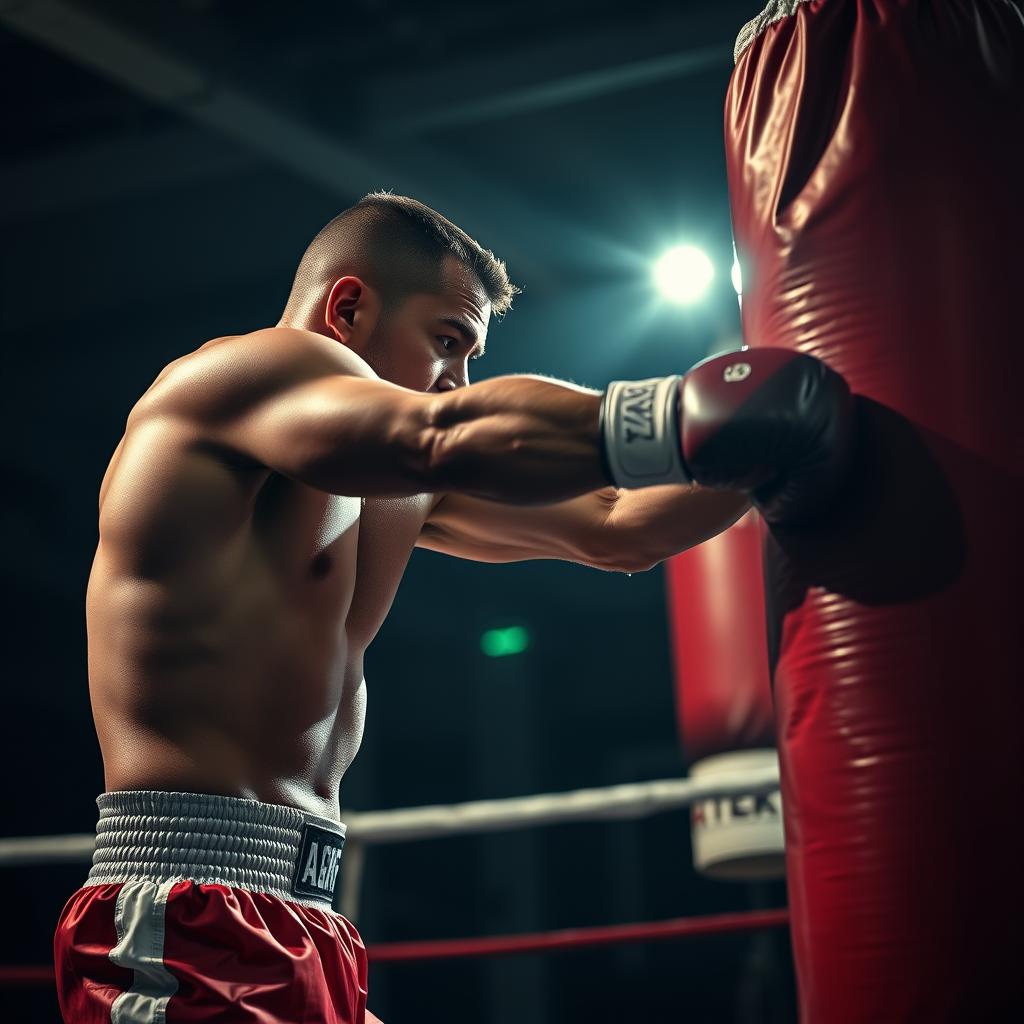
The hook is responsible for more knockouts than any other punch in boxing. It travels outside the line of vision, arrives at an angle the opponent rarely sees in time, and channels rotational force from the floor through the hips and into the target. Yet most beginners throw a sloppy, arm-driven hook that wastes energy and invites counters. Mastering how to throw a hook in boxing requires understanding the biomechanics behind the punch — the 90-degree elbow angle, the hip torque, the foot pivot, and the weight transfer that separates a knockout hook from a lazy swing.
– The hook generates power primarily through hip rotation and weight transfer, not the arm.
– A proper hook maintains roughly a 90-degree bend at the elbow throughout the punch.
– The lead hook (left hook for orthodox fighters) is the most commonly used knockout punch in professional boxing.
– Pivoting the lead foot and rotating the hips as a single unit is what separates a powerful hook from an arm punch.
– Poor hook mechanics are one of the leading causes of wrist injuries in boxing training.
1. Why the Hook Matters in Boxing
The hook occupies a unique place in the boxing arsenal. While the jab and cross travel in a straight line down the center, the hook arcs in from the side and attacks an angle that is difficult to defend with a standard high guard. Biomechanical research published in Frontiers in Sports and Active Living found that the hook relies more on shoulder and pelvis contribution at impact than any other punch, which explains why it can generate devastating force even at close range where straight punches lose their effectiveness.
Joe Frazier built an entire Hall of Fame career around his left hook, using it to drop Muhammad Ali in their first fight in 1971. Mike Tyson’s lead hook to the body was so punishing that opponents would lower their guard, opening themselves up for the same hook upstairs. Oscar De La Hoya’s left hook was a precision weapon that he loaded with textbook hip rotation and timed off his jab. These fighters understood something fundamental: the hook punch form rewards correct mechanics far more than raw strength.
“The left hook is the most dangerous punch in boxing. It’s the one you don’t see coming.” — Eddie Futch, Hall of Fame trainer who coached Joe Frazier and Larry Holmes
If you are still building your basic punching foundation, start with our guides on how to throw a jab and how to throw a cross before adding the hook to your combinations.
2. The Biomechanics Behind a Powerful Hook
The hook is a rotational punch. Unlike the jab or cross, which derive force from linear extension, the hook creates force through angular momentum — your entire body rotating as a unit around a central axis. The kinetic chain starts at the floor: your foot pushes against the ground, that force travels up through the knee, the hips rotate, the torso follows, and the shoulder whips the arm through on a horizontal arc. Research published in Frontiers in Sports and Active Living confirms that elite boxers generate significantly more hip rotation than amateurs when throwing hooks.
Three mechanical principles matter most for the boxing hook technique:
– The 90-degree elbow angle keeps the forearm and fist compact, reducing the moment of inertia so the punch travels faster. Opening past 90 degrees turns the hook into a slow, looping swing.
– Hip torque before shoulder rotation ensures the large muscles of the core and legs drive the punch. If the shoulder fires first, you are arm-punching.
– The foot pivot anchors the rotation. Turning the lead foot inward creates the base from which the hips can rotate. Without it, the hips stall and the punch has no foundation.
3. How to Throw a Lead Hook: Step-by-Step
The lead hook — the left hook for orthodox fighters, right hook for southpaws — is the most commonly thrown hook in boxing. Here is the full breakdown of the hook punch form from the ground up.
Starting Position
Begin in your standard boxing stance with your feet shoulder-width apart, knees slightly bent, hands up protecting your chin, and elbows tucked close to your ribs. Your weight should be distributed roughly evenly between both feet, or slightly favoring the lead leg. Make sure your footwork fundamentals are solid before adding power punches.
The Foot Pivot
Initiate the punch by pivoting your lead foot inward, rotating on the ball of the foot so your heel turns outward. Think of it like squashing a bug under your big toe. This pivot is what starts the kinetic chain — it forces the knee, hip, and torso to rotate together.
Hip and Torso Rotation
As the foot pivots, your lead hip drives forward and across your body. Your torso follows in a sharp rotational movement. The key here is that the hips lead and the shoulders follow. Do not rush the shoulder forward independently. Your rear hand stays glued to your chin for protection throughout the entire movement.
The Arm Path
Raise your lead elbow to shoulder height so that your upper arm is roughly parallel to the floor. Your elbow should be bent at approximately 90 degrees, with the fist, elbow, and shoulder forming a single horizontal line. The punch travels in a tight arc — not a wide sweeping motion. Your fist connects with the target using the first two knuckles (index and middle finger), with the palm facing down toward the floor.
The Follow-Through and Return
After impact, immediately snap your fist back to guard. Do not let the hook carry your body past the target. Reset your feet, bring your weight back to center, and return to your stance. A clean hook ends exactly where it started — hands up, balance intact.
A poorly thrown hook is one of the most common causes of wrist injuries in boxing. If your wrist is not aligned straight with your forearm at the moment of impact, the force buckles the joint sideways. This leads to sprains, ligament tears, and in severe cases, fractures of the small carpal bones. Always keep your wrist locked and straight, make contact with the first two knuckles only, and ensure your hand wraps provide solid wrist support before hitting the heavy bag. If you feel any wrist pain during hook practice, stop immediately and check your form before continuing.
4. Hook Variations Every Boxer Should Know
The lead hook to the head is just one version of this punch. Skilled boxers use multiple hook variations to attack different targets and create openings. Each variation shares the same rotational foundation but differs in target height, arm angle, and tactical purpose.
| Variation | Target | Elbow Angle | Key Mechanic | Best Used After |
|---|---|---|---|---|
| Lead Hook | Head (temple/jaw) | ~90° | Lead foot pivot + hip rotation; palm faces floor | Jab or after slipping a cross |
| Rear Hook | Head (temple/jaw) | ~90° | Rear foot pivot + full torso rotation; longer range | Lead hook or jab-cross combo |
| Body Hook | Liver (left side) / Ribs | ~80–90° | Bend knees to lower level; drive upward through the ribs | Jab to the head, then drop level |
| Shovel Hook | Solar plexus / Chin (close range) | ~45–70° | Hybrid between hook and uppercut; palm faces inward, angled upward | Inside fighting after clinch break |
The body hook deserves special attention. A well-placed left hook to the liver can end a fight instantly. To throw it, drop your level by bending at the knees (not the waist), maintain that 90-degree elbow, and drive the punch slightly upward into the soft tissue below the ribcage. Mike Tyson was a master of this punch, using his compact frame and explosive hip rotation to dig hooks into the body before doubling up to the head.
The shovel hook is thrown at close range with a tighter elbow angle and a slightly upward trajectory — a hybrid between hook and uppercut that is extremely effective inside the pocket.
5. Common Mistakes That Kill Your Hook Power
Even experienced fighters develop bad habits with their hook over time. Here are the most frequent errors and how to fix them.
Dropping the Opposite Hand
When throwing a left hook, many fighters let their right hand drift from their chin. This is an open invitation for a counter cross down the center. Keep your rear hand glued to your cheekbone throughout the movement. Train this by doing slow-motion hooks in front of a mirror and watching that rear hand.
The Wide, Looping Swing
Opening the elbow well past 90 degrees turns your hook into a haymaker — slower, telegraphed, and landing with the weaker outside knuckles. Keep your elbow at shoulder height with a tight 90-degree bend. A shorter arc means a faster punch with proper knuckle alignment.
No Foot Pivot
Throwing a hook without rotating the lead foot robs the punch of its primary power source. If your foot stays flat and forward-facing, the hips cannot rotate and you end up arm-punching. Practice the pivot in isolation until the ground feel becomes automatic.
Leaning Forward or Off-Balance
Some fighters lean their head past their lead knee when hooking, shifting their center of gravity too far forward. This invites counters and kills follow-up opportunities. Keep your head centered over your hips and your weight balanced through the pivot. Learning to slip punches alongside your hook practice builds the defensive instincts that keep you safe.
Film yourself throwing hooks on the heavy bag and watch the footage at half speed. You will spot mechanical issues — a lazy pivot, a drifting rear hand, a wide elbow — that are impossible to feel in real time. Most professional coaches use video review as a standard part of technique correction, and there is no reason amateur fighters should skip it. Even a phone propped on a water bottle gives you enough footage to identify your biggest form breakdowns.
6. Drills to Build a Devastating Hook
Knowing the correct form is only half the equation. You need targeted drills to build the muscle memory, timing, and power that make your boxing hook technique fight-ready.
Mirror Shadowboxing (Slow Motion)
Stand in front of a full-length mirror and throw lead hooks at 30 percent speed. Watch your elbow angle, foot pivot, hip rotation, and hand return. Do 3 rounds of 3 minutes focusing purely on form. This is the single best drill for beginners because it lets you self-correct in real time.
Heavy Bag Power Hooks
Stand at close-to-mid range and throw single lead hooks, driving through the bag rather than slapping at it. Reset your stance between every punch for the first few sessions. Once consistent, chain hooks into combinations — jab-cross-hook is the foundational three-punch combo. A quality Everlast heavy bag gives you the weight and resistance needed for serious hook training.
Double-End Bag Timing Drill
The double-end bag moves unpredictably, forcing you to time your hook and adjust range on every repetition. Throw single hooks, let it bounce back, slip the rebound, and hook again. A double-end bag is one of the best investments for developing hook precision at home.
Partner Mitt Work
Have your training partner hold a focus mitt flat at shoulder height, palm facing inward. Throw lead hooks into the mitt while your partner watches form and calls out corrections. Mitt work teaches you to throw hooks at realistic angles and distances that bags cannot simulate.
Pivot-Only Drill
Strip the punch away and just practice the lower body. Stand in your stance and pivot the lead foot, rotating hips and torso as if throwing a hook, but keep your arms in guard position. Do 20 repetitions per side. This isolates the power source and builds the rotational habit that fires automatically when you add the arm back in.
7. Setting Up the Hook in Combinations
A naked hook — thrown without setup — is easy to see and counter. The punch becomes far more effective when disguised within combinations or thrown as a counter after a defensive move.
The most fundamental combination is the 1-2-3: jab, cross, lead hook. The jab draws attention to the center line, the cross drives the guard backward, and the hook comes around the side. This works because the cross naturally loads the lead hip for the hook. The slip-hook counter is equally dangerous — slip outside the opponent’s jab and immediately fire a lead hook while your body is already rotated and loaded. Joe Frazier built a career around this exact counter.
– Jab, cross, lead hook (the classic 1-2-3)
– Jab, lead hook to body, lead hook to head
– Slip outside the jab, counter lead hook
– Lead hook to body, cross, lead hook to head
– Double jab, rear hook (surprises orthodox fighters expecting a cross)
After each combination, return to your guard immediately and reset your feet.
8. Frequently Asked Questions
1. Should my palm face down or toward me when throwing a hook?
Both positions are legitimate. The palm-down (horizontal fist) method is the textbook approach — it extends reach and aligns the wrist naturally at longer range. The thumb-up (vertical fist) variation is quicker, feels more natural for many fighters, and is more common among professionals at close range. Experiment with both. The most important factor is that your wrist remains straight and locked at impact regardless of palm orientation.
2. How do I add more power to my hook without muscling the punch?
Hook power comes from the ground up. Focus on a deeper foot pivot, faster hip rotation, and maintaining the tight 90-degree elbow. Fighters who tense the arm actually slow the punch down because they fight their own rotation. Stay relaxed through the delivery and only tighten the fist at impact. Heavy bag work and rotational core exercises like medicine ball throws build the specific strength needed.
3. Is the lead hook or the rear hook more effective?
The lead hook produces more knockouts statistically because it travels a shorter distance and is harder to see. The rear hook requires more rotation and arrives slightly later, making it easier to counter. Most coaches recommend mastering the lead hook first. In combination, the rear hook works best as a follow-up to a lead hook or as a surprise after a jab when the opponent expects a cross.
Conclusion
The hook rewards patience and correct mechanics more than any other punch in boxing. Nail the foot pivot, let the hips drive the rotation, keep that elbow locked at 90 degrees, and snap back to your guard every single time. Start slow with shadowboxing, build power on the heavy bag, sharpen timing on the double-end bag, and refine accuracy on the mitts. How to throw a hook in boxing is not a question you answer once — it is a skill you sharpen across every training session. Put in the repetitions with proper form, study the fighters who mastered this punch before you, and the hook will become the most dangerous weapon in your arsenal.
Written by the AskMeBoxing Team