
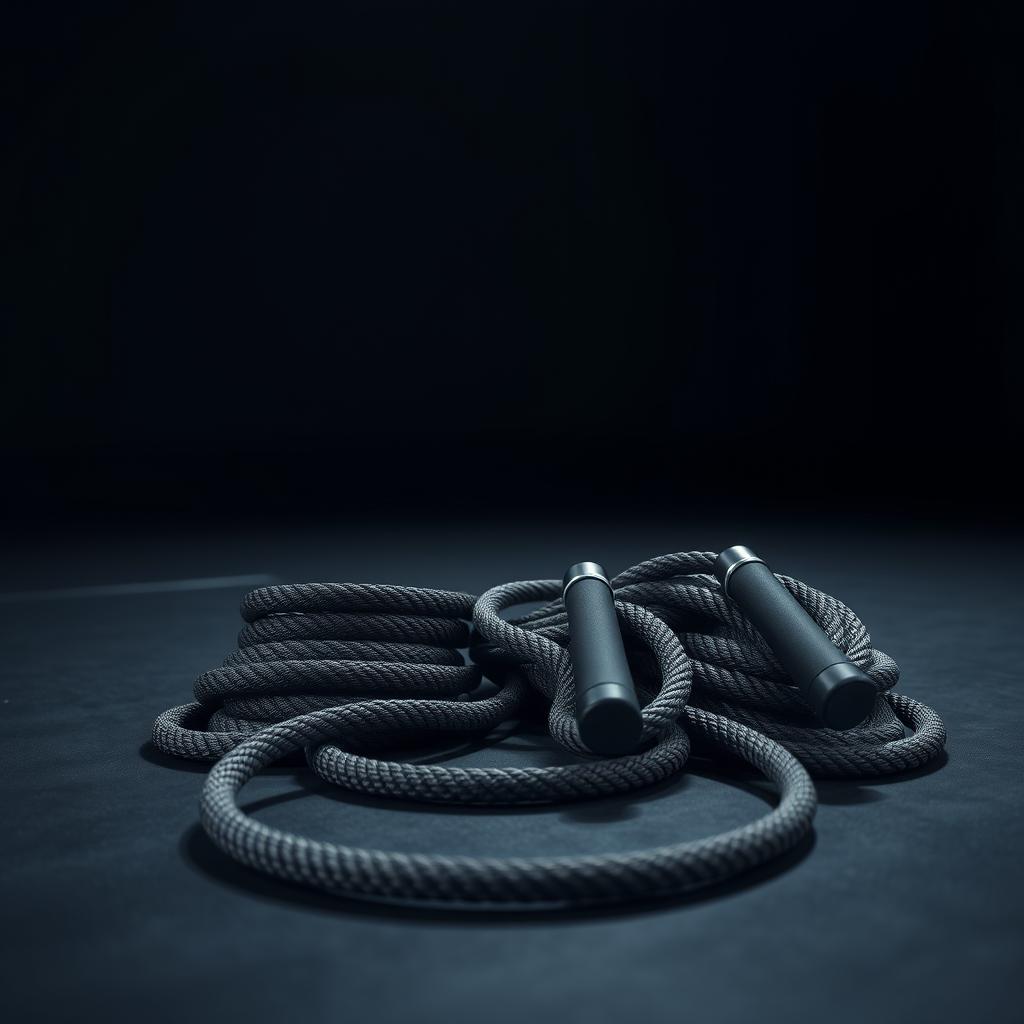
Skipping rope has been a cornerstone of boxing conditioning since the sport’s earliest training camps. Adding weight to that rope changes the equation significantly — heavier ropes recruit more muscle fibers in your shoulders, forearms, and core while simultaneously building cardio endurance that translates directly to the ring. We spent weeks testing and comparing weighted jump ropes across weight ranges, handle designs, and durability to identify the best weighted jump ropes for boxing training in 2026.
Disclosure: AskMeBoxing is reader-supported. When you buy through links on this page, we may earn a small affiliate commission at no extra cost to you. This does not influence our editorial recommendations.
Quick Overview:
– The HPYGN Weighted Heavy Jump Rope takes our top spot for its combination of multiple weight options, anti-slip handles, and an unbeatable price under $20.
– Weighted ropes between 1–3 lbs suit most boxing training needs; go heavier (4–5 lbs) only for dedicated strength conditioning sets.
– Five minutes of weighted rope work can approximate the calorie burn and muscular engagement of 30 minutes with a standard speed rope, according to manufacturer testing data.
1. Quick Comparison: Top 5 Weighted Jump Ropes for Boxing
| Product | Weight Options | Handle Type | Price Range | Best For |
|---|---|---|---|---|
| HPYGN Weighted Heavy Jump Rope | 2.8 lb, 3.8 lb, 5 lb | Anti-slip ergonomic | ~$20 | Overall value + multiple weight tiers |
| EliteSRS Heavy Jump Rope | 1.5 lb, 2 lb, 4 lb | Contoured rubber grip | $30–$45 | Boxers wanting gym-quality feel |
| BODYRHYTHM Weighted Jump Rope Set | 1 lb, 2 lb, 5 lb (interchangeable) | Foam-padded | $25–$35 | Versatility with swappable ropes |
| Crossrope Get Lean Jump Rope | 1/4 lb, 1/2 lb, 1 lb, 2 lb | Slim-profile aluminum | $60–$120 | Premium build + app integration |
| Garage Fit Weighted Jump Rope | 1.5 lb, 2 lb | Textured plastic grip | $15–$25 | Budget-friendly heavy rope basics |
2. In-Depth Reviews
HPYGN Weighted Heavy Jump Rope — Best Overall
The HPYGN Weighted Heavy Jump Rope earns our top recommendation because it addresses the three things boxers care about most in a weighted rope: handle grip security during sweaty rounds, rope weight options that match different training goals, and a price that leaves room in the budget for the rest of your gear. At 9.2 feet in length, it fits most fighters between 5’4″ and 6’2″ without modification.
The rope itself uses a polymer synthetic fiber core that carries the weight evenly along its length rather than concentrating it in the handles. This matters for boxing training because distributed weight forces your shoulders, forearms, and wrists to work through the full rotation arc — not just at the endpoints. You get three weight options: the 2.8 lb version for general conditioning, the 3.8 lb for moderate resistance that mimics the arm fatigue of later rounds, and the 5 lb for dedicated strength work. The brand claims that five minutes of weighted skipping matches the engagement of 30 minutes with a standard rope — and while that specific ratio is hard to verify independently, the muscular demand is noticeably higher even in the first 60 seconds.
The anti-slip ergonomic handles are thicker than what you find on speed ropes, which actually benefits boxers. A wider grip keeps your hands in a more natural fist-adjacent position and reduces the tendency to death-grip the handles, a common mistake that leads to premature forearm fatigue. Each rope ships with a portable carrying bag, a small addition that makes it easier to toss in your gym bag alongside your gloves and wraps.
What we liked:
– Three weight tiers (2.8, 3.8, 5 lb) let you progress without buying a new rope
– Polymer synthetic fiber distributes weight evenly along the full rope length
– Anti-slip handles maintain grip even through heavy sweat
– Under $20 price point undercuts most competitors significantly
What could be better:
– Fixed 9.2ft length cannot be adjusted — taller fighters may need to check sizing
– The 5 lb version can feel punishing on shoulders during longer sessions for beginners
– No ball bearing swivel system, which slightly affects rotation smoothness at high speed
Check the HPYGN Weighted Jump Rope price on Amazon
EliteSRS Heavy Jump Rope — Best Gym-Quality Option
EliteSRS has a strong reputation in the combat sports community, and their heavy jump rope reflects that pedigree. The rope uses a PVC-coated steel cable system that provides a smooth, consistent swing arc even at the heavier weight settings. Available in 1.5 lb, 2 lb, and 4 lb configurations, EliteSRS gives you a lighter starting point than the HPYGN, which makes it a better entry point for fighters who have never trained with a weighted rope before.
The contoured rubber grip handles feel noticeably premium. They have a slight taper toward the base that encourages proper wrist positioning and a sealed bearing system that keeps the rotation fluid. The rope length is adjustable via a cable clamp, which solves the fixed-length problem you encounter with cheaper ropes. If you share equipment with training partners of different heights, this adjustability alone may justify the higher price.
What we liked:
– Sealed bearing system delivers the smoothest rotation on this list
– Adjustable cable length fits any fighter height
– Lower starting weight (1.5 lb) eases the transition from speed ropes
What could be better:
– Priced 50–100% higher than the HPYGN for comparable functionality
– PVC-coated cable can sting badly on shin misses compared to fabric ropes
For fighters building their rope skills from scratch, our guide on why boxers jump rope explains the specific conditioning benefits and how rope work transfers to ring movement.
BODYRHYTHM Weighted Jump Rope Set — Best for Versatility
The BODYRHYTHM Weighted Jump Rope Set takes a different approach by shipping multiple interchangeable ropes with a single pair of handles. Most sets include a light rope (around 1 lb), a medium rope (2 lb), and a heavy rope (5 lb), giving you the ability to switch resistance levels within the same workout. This is a genuine advantage for boxers who want to simulate the pacing of a fight — lighter weight for the early speed rounds, heavier weight for the later conditioning rounds.
The foam-padded handles are comfortable and sweat-absorbent, though they lack the structural rigidity of the EliteSRS grips. The quick-connect system for swapping ropes works smoothly and holds securely during use. The set format also represents good value since buying three separate ropes from other brands would cost significantly more.
What we liked:
– Three ropes in one set covers light, medium, and heavy training
– Quick-swap system makes mid-workout weight changes practical
– Good overall value compared to buying individual ropes
What could be better:
– Foam handles compress over time and lose their cushioning
– Individual rope quality does not match dedicated single-rope brands
– Connection point between rope and handle can develop wobble after heavy use
Safety Warning:
Start lighter than you think you need. A 5 lb weighted rope generates substantial centrifugal force, and swinging it at speed puts serious rotational stress on your shoulder joints and wrist tendons. If you are new to weighted ropes, begin with a 1.5–2.8 lb rope for two to three weeks before progressing. Jumping on a forgiving surface (rubber mat, wooden floor) rather than concrete also reduces joint impact. Stop immediately if you feel sharp pain in your shoulders or wrists — muscle fatigue is normal, joint pain is not.
Crossrope Get Lean Jump Rope — Best Premium Option
Crossrope occupies the premium end of the weighted rope market, and the Get Lean set justifies that positioning through build quality, engineering, and a companion training app. The patented fast-clip connection system lets you swap between rope weights (typically 1/4 lb and 1 lb in the base set, with heavier options sold separately) in seconds. The slim-profile aluminum handles are precisely balanced and house a ball-bearing rotation system that is genuinely smoother than anything else on this list.
The ropes themselves use a coated steel cable construction with a slight taper in weight distribution that creates a satisfying, predictable swing arc. The companion app includes structured jump rope workouts, interval timers, and progress tracking, which is a meaningful bonus for fighters who want data on their conditioning work. The downside is obvious: pricing starts around $60 for the basic set and climbs above $100 if you add heavier ropes.
What we liked:
– Best-in-class build quality and bearing system
– Fast-clip weight swapping is genuinely quick and secure
– Companion app adds structured workout programming
What could be better:
– Most expensive option on this list by a wide margin
– Heaviest rope option (2 lb) is still lighter than what some boxers want for strength conditioning
– Replacement ropes are proprietary and cost $20–$30 each
“I bought the Crossrope set after years of using cheap ropes, and the difference in rotation quality is immediately obvious. The handles feel like precision instruments. But at this price, I had to think about whether I was buying a training tool or a piece of tech — it is genuinely both.” — verified buyer review
Garage Fit Weighted Jump Rope — Best Budget Pick
Garage Fit makes a simple pitch: a heavy rope at the lowest possible price point with no extras. Their weighted jump rope comes in 1.5 lb and 2 lb options, uses a thick poly-dacron rope that carries the weight through its braided fiber construction, and ships with basic textured plastic handles that get the job done without any ergonomic flourishes.
This is the rope for fighters who want to add weighted rope work to their routine without committing much money upfront. It handles well for its price, and the poly-dacron construction is durable enough to survive regular outdoor use on concrete or asphalt. The handles are the weak point — they are functional but lack the grip texture and shape that make longer sessions comfortable.
What we liked:
– Lowest price on this list, often under $15 on sale
– Poly-dacron rope is durable and weather-resistant for outdoor training
– Simple design with no parts that can break or malfunction
What could be better:
– Only two weight options (1.5 lb and 2 lb)
– Handles have no anti-slip treatment and become slippery when wet
– Fixed length requires cutting and re-knotting for adjustment
3. Buyer’s Guide: How to Choose a Weighted Jump Rope for Boxing
Weight Selection
The most common mistake fighters make when buying their first weighted rope is going too heavy. Your standard speed rope weighs a few ounces. Jumping from that to a 5 lb rope is the equivalent of trying to spar hard before learning how to throw a jab. Start in the 1.5–3 lb range for conditioning and cardio work, which is where most boxing-specific benefits live. Reserve the 4–5 lb ropes for dedicated shoulder and forearm strengthening sets of 1–3 minutes, not for extended 15-minute sessions.
The weight-to-benefit curve also flattens at the heavier end. A 2.8 lb rope like the HPYGN 2.8 lb option delivers roughly 80% of the muscular engagement of a 5 lb rope with far less joint stress. Most boxing coaches recommend the moderate range for daily conditioning work.
Handle Design
Weighted rope handles need to do more work than speed rope handles. The added centrifugal force means your grip is under constant load, and any slippage during a sweaty round wastes energy and breaks rhythm. Look for anti-slip textures, ergonomic contouring, and a diameter thick enough to prevent the death-grip reflex. Foam handles absorb sweat but degrade over time. Rubber and textured plastic handles last longer but can feel harsh during extended sessions.
Integrating weighted rope into your boxing warm-up makes a significant difference in round-one readiness. Our boxing warm-up routine covers how to structure weighted rope sets alongside shadow boxing and dynamic stretching.
Rope Material and Weight Distribution
Weight distribution matters more than total weight. A rope that concentrates its mass in the handles (handle-weighted) trains your grip and forearms but provides less resistance through the swing arc. A rope that distributes weight along its entire length (rope-weighted) engages your shoulders, back, and core more evenly throughout the rotation. For boxing conditioning, distributed-weight ropes like the HPYGN polymer fiber design provide more sport-specific training stimulus because they replicate the sustained arm engagement of throwing punches over multiple rounds.
Buying Tip:
If you are choosing between two ropes at similar prices, pick the one with multiple weight options or an adjustable length. A rope you can grow into saves money over time. The HPYGN line lets you start at 2.8 lbs and progress to 5 lbs without replacing your entire setup. Similarly, interchangeable sets like the BODYRHYTHM give you three weight tiers for roughly the cost of two individual ropes from other brands.
Rope Length and Sizing
Stand on the center of the rope with one foot. The handles should reach your armpits for standard boxing jump rope technique. Most weighted ropes designed for adults fall in the 9–10 foot range, which works for fighters between approximately 5’4″ and 6’2″. If you are significantly taller or shorter, look for adjustable-length options or ropes that specify sizing by height range. A rope that is too short forces you into an awkward hunched posture, while a rope that is too long reduces swing speed and catches on the ground.
Durability and Surface Considerations
Weighted ropes take more abuse than speed ropes because each ground strike carries more force. PVC-coated cables handle indoor gym floors well but crack on rough outdoor surfaces. Braided poly-dacron ropes (like the Garage Fit) survive concrete and asphalt. Polymer fiber ropes (like the HPYGN) fall in between — they handle smooth outdoor surfaces but wear faster on rough concrete. If you train outdoors regularly, prioritize rope material durability over handle aesthetics.
4. How Weighted Jump Ropes Improve Boxing Performance
Weighted rope training builds the specific type of endurance that boxing demands. Throwing punches for three-minute rounds with 60 seconds of rest taxes your shoulders, arms, and cardiovascular system in a way that running alone does not replicate. A weighted rope mimics that sustained upper-body load while simultaneously training footwork rhythm, coordination, and timing.
The conditioning benefits extend beyond raw endurance. Rotating a 2–3 lb rope at speed strengthens the rotator cuff muscles that stabilize your shoulder during hooks and uppercuts. It builds forearm stamina that prevents your guard from dropping in later rounds. And the rhythmic footwork pattern reinforces the light, bouncing stance that allows quick lateral movement and angle changes in the ring. For a deeper look at how conditioning tools stack up, our guide on how to improve boxing endurance and stamina covers the full training picture.
Weighted ropes also serve as an efficient warm-up tool. Two to three minutes of moderate-weight rope work elevates your heart rate, loosens your shoulders, and primes your nervous system for explosive movement — all without the joint impact of running or the setup time of a full calisthenics routine.
5. FAQ
1. How heavy should a weighted jump rope be for boxing training?
For most boxers, a rope between 1.5 and 3 lbs provides the ideal balance of resistance and usability for daily conditioning work. This range increases shoulder and forearm engagement without overloading your joints or degrading your technique. Reserve ropes above 3 lbs for short, focused strength sets rather than sustained cardio sessions. Beginners should start at the lighter end and progress upward over two to four weeks as their shoulders adapt.
2. Can I use a weighted jump rope every day?
You can, but vary the intensity. Using a heavy rope at maximum effort every day invites overuse injuries in the shoulders and wrists. A practical approach is to alternate between your weighted rope and a standard speed rope throughout the week — weighted on strength and conditioning days, speed rope on technique and cardio days. If you do use the weighted rope daily, keep at least two sessions per week at a lighter weight or shorter duration to allow recovery.
3. What is the difference between a handle-weighted and a rope-weighted jump rope?
Handle-weighted ropes concentrate the mass in the grips, which primarily increases grip and forearm demand. Rope-weighted designs distribute mass along the cord itself, which engages your shoulders, back, and core more evenly through the full swing arc. For boxing-specific training, rope-weighted designs are generally more effective because they replicate the sustained upper-body fatigue pattern of throwing punches across multiple rounds. Most ropes on this list — including the HPYGN, EliteSRS, and Garage Fit — use a rope-weighted distribution.
6. Final Verdict
The HPYGN Weighted Heavy Jump Rope wins our top recommendation for the best weighted jump ropes for boxing because it delivers three weight tiers, solid construction, and anti-slip handles at a price that makes competitors hard to justify. If you want the smoothest rotation and do not mind paying three to five times more, Crossrope sets the standard for premium build quality. For fighters who want a single purchase covering light-to-heavy training, the BODYRHYTHM interchangeable set provides genuine versatility. Whichever rope you choose, adding weighted rope work to your boxing conditioning will strengthen your shoulders, extend your endurance, and sharpen your footwork timing in ways that few other training tools can match.
Written by the AskMeBoxing Team

 general2026.06.26Best Gel Boxing Gloves: What the Gel Actually Does
 general2026.06.26Best Lace Up Boxing Gloves for Serious Training and Competition
 general2026.06.26Best Boxing Gloves for Wrist Support: Top Picks for Injury-Free Training
 general2026.06.26YOKKAO Muay Thai Gloves Review: Are They Worth $160-200?